


How Are Roasted Chickpeas Made? The Traditional Production Process
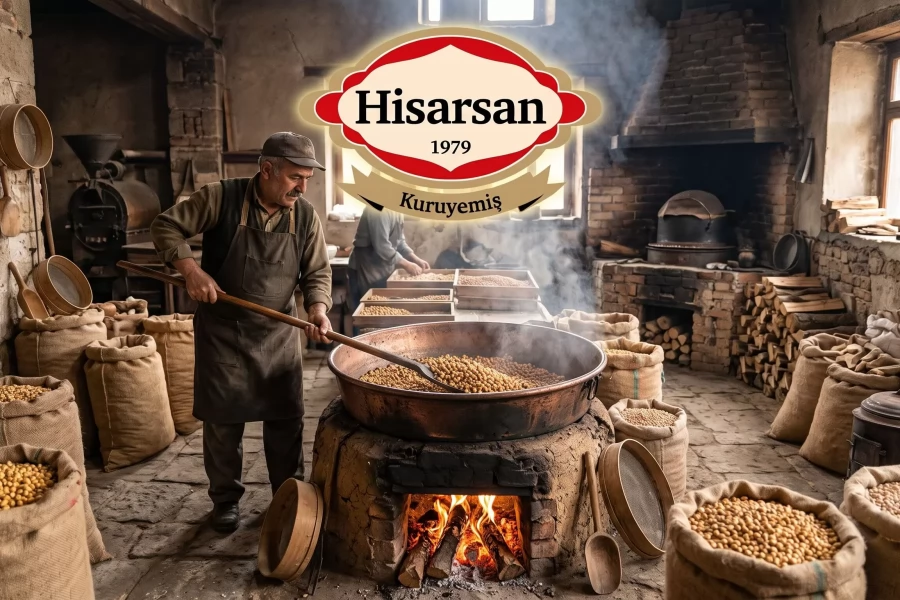
Roasted chickpeas, known as leblebi in Turkish, are a traditional snack made by processing chickpeas through several stages. Enjoyed in Türkiye for generations, they are known for their distinctive flavour, texture and variety. The district of Serinhisar in Denizli is particularly recognised for its long-standing roasted chickpea production tradition. But how are roasted chickpeas made, and what are the main stages of production?
Selecting Chickpeas for Production
The process begins with selecting chickpeas that have suitable characteristics and quality. Their size, structure and overall condition can influence the following stages of production. Choosing appropriate raw materials is therefore an important part of achieving the desired product characteristics.
Cleaning and Preparation
Selected chickpeas are cleaned to remove foreign materials and prepared for further processing. The purpose of this stage is to make the chickpeas suitable for the subsequent production steps. Specific procedures may vary according to the production method and the intended variety.
Heat Treatment and Resting
Heat treatment and resting are important stages in traditional roasted chickpea production. Depending on the method used, chickpeas undergo specific treatments and are rested under appropriate conditions. These processes help prepare them for the next stages of production.
Roasted chickpea production involves more than a single roasting step. In traditional methods, several processes may be carried out in a particular sequence to develop the product's characteristic qualities.
Roasting and Finishing
Roasting is one of the key stages in the production process. Appropriate heat treatment contributes to the characteristic flavour and texture of roasted chickpeas. Methods and processing conditions can vary according to the producer and the variety being prepared.
Yellow, white, crunchy and coated roasted chickpeas may require different production approaches. Coated varieties, in particular, may involve additional steps to achieve the desired product characteristics.
Packaging and Quality Control
After processing, products are checked against established quality criteria and prepared for packaging. Suitable packaging helps protect products during storage and transportation. Maintaining consistent quality standards remains important throughout the process, from production to the consumer.
Hisarsan Kuruyemiş and the Production Heritage of Serinhisar
Founded in 1976 by Hacı Mehmet Kabayuka in Serinhisar, Denizli, Hisarsan Kuruyemiş has grown within the region's established roasted chickpea production tradition. In 2004, the company strengthened its corporate structure under the name Hisarsan Kuruyemiş San. Tic. Ltd. Şti. It continues its operations under the management of Avni Kabayuka and Sercan Kabayuka.
Building on experience passed down through three generations, Hisarsan Kuruyemiş offers a broad product portfolio that includes yellow, white, crunchy and coated roasted chickpeas, as well as chips and various nut products.
Roasted chickpea production involves a series of careful steps, from raw material selection to final inspection. Hisarsan Kuruyemiş continues its work in the roasted chickpea and snack industry with the aim of preserving Serinhisar's production heritage and developing its product range.