



Uses of Nuts in Food Manufacturing
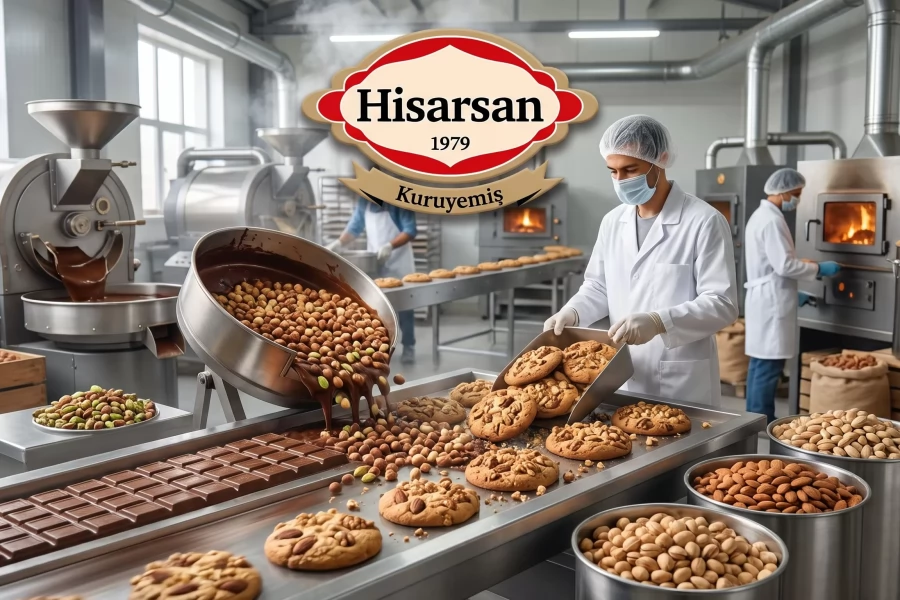
Why Are Nuts Used in Food Manufacturing?
Nuts are widely used in different areas of the food industry thanks to their distinctive flavours, aromas and physical characteristics. They can be incorporated whole, chopped, ground or combined with other ingredients, offering manufacturers a wide range of applications. Products such as hazelnuts, almonds, pistachios, walnuts and roasted chickpeas can add distinctive qualities to various food categories. Since 1976, Hisarsan Kuruyemiş has continued to preserve the roasted chickpea tradition of Serinhisar and its connection with this rich food culture. Use in Snack Production
Nuts can be used on their own or combined with other ingredients in the production of ready-to-eat snacks. Mixed snack packs, individual portions and various dried food blends are examples of these applications. Roasted chickpeas are also suitable for different snack products thanks to their distinctive structure and flavour. The tradition of Hisarsan Kuruyemiş reflects the importance of products that appeal to a variety of consumer preferences. Nuts in Chocolate and Confectionery Production
Nuts can be used as fillings or coating ingredients in the chocolate and confectionery industries. Hazelnut, almond and pistachio pieces add texture and aroma, while certain roasted chickpea varieties can also be incorporated into coated snack products. The size, breakage rate and flavour characteristics of these ingredients are important considerations when determining their suitability for a particular product. The Role of Nuts in Industrial Food Blends
The ingredients used in food blends vary according to the type of final product. Chopped nuts can be included in cereal-based mixtures, granola products and different snack formulations. Ensuring that ingredient sizes and physical characteristics are compatible with production equipment can help maintain a consistent manufacturing process. For this reason, raw material selection and product specifications are important considerations for food manufacturers. Contributions to Flavour, Texture and Presentation
Nuts contribute more than flavour to food products; they also influence texture and visual presentation. Hazelnut or pistachio pieces sprinkled over a product can enhance its appearance, while ingredients of different sizes create distinctive textures. Roasted chickpeas can also bring their own character to various food applications thanks to their unique structure. Why Product Specifications Matter to Manufacturers
When selecting nuts for food manufacturing, several factors should be considered together, including size, moisture level, aroma, physical integrity and intended use. A product intended for grinding has different requirements from one that will be presented whole. Selecting raw materials that suit the manufacturing process helps maintain product consistency and achieve the intended result. Hisarsan Kuruyemiş's long-standing experience with roasted chickpeas also reflects the versatility of this product category. Hisarsan Kuruyemiş and Product Variety
The journey of Hisarsan Kuruyemiş began in 1976 in Serinhisar, Denizli, and has been shaped by a tradition of preserving roasted chickpea culture across generations. The different applications of nuts in food manufacturing demonstrate that these products are not limited to direct consumption. Their use in everything from snack blends to coated products highlights their importance throughout the food industry. Conclusion
Nuts can be used in many ways in the production of snacks, chocolate, confectionery and various food blends. Selecting ingredients according to their intended application is important for manufacturing efficiency and the quality of the final product. With its roasted chickpea heritage rooted in Serinhisar, Hisarsan Kuruyemiş remains part of this diverse food culture.