



The Importance of Quality Control and Standards in Nut Products
Why Is Quality Control Important in Nut Production?
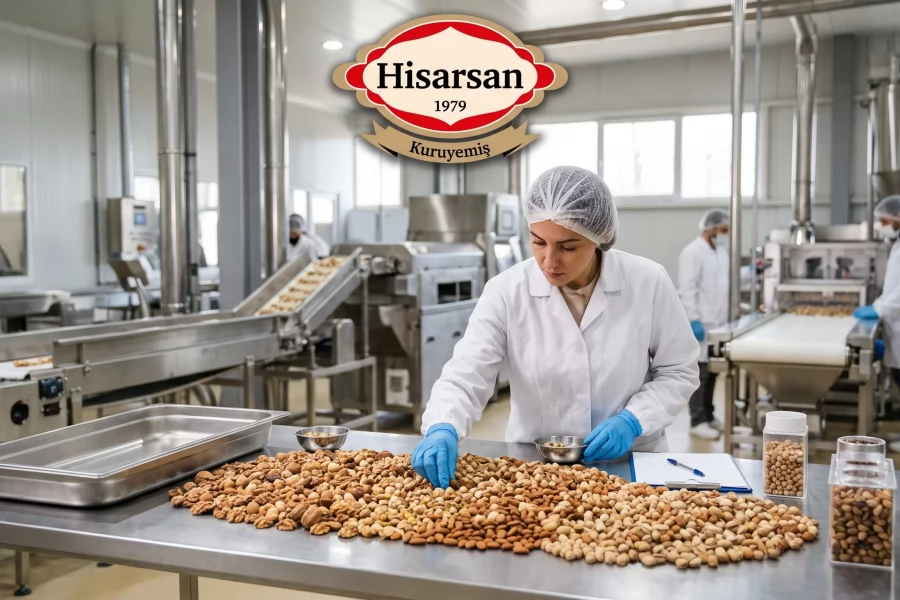
Ensuring that products meet defined characteristics is an important part of the nut production process. Quality control involves evaluation at several stages, from raw material selection and processing to final product inspections. Appearance, aroma, texture and general product characteristics may all be considered during these assessments. Since 1976, Hisarsan Kuruyemiş has continued a product tradition shaped by the roasted chickpea heritage of Serinhisar. Raw Material Inspection and Preparation
The characteristics of raw materials play an important role in achieving a suitable final product. Nuts should be assessed according to their variety, size, physical condition and intended use. Inspections carried out before production help identify differences that may affect later stages. In roasted chickpea production, the characteristics of the chickpeas used are also among the factors that influence the final product. Maintaining Standards Throughout Production
Following defined standards throughout production helps maintain consistency between products. Processes such as roasting, processing, sieving and classification should be carried out in ways that suit the characteristics of each product. Monitoring processing conditions also makes it easier to assess variations during production. Hisarsan Kuruyemiş's long-standing roasted chickpea heritage highlights the importance of combining traditional product knowledge with production experience. Evaluating Appearance, Aroma and Texture
Quality assessment in nuts is not limited to external appearance. Colour, smell, taste, texture and product integrity can all be evaluated together. Since the expected characteristics vary between product types, assessment criteria should be adapted accordingly. The distinctive structure and characteristic aroma of roasted chickpeas are among the features that may be considered during these inspections. Hygiene and Food Safety Practices
Maintaining hygiene in food production is essential not only for product quality but also for consumer safety. Clean production areas, appropriate equipment use, staff hygiene and suitable storage conditions are fundamental parts of this process. Production must also comply with applicable food regulations and relevant standards. These practices contribute to a controlled and orderly manufacturing environment. Inspections Before and After Packaging
Checks carried out before and after packaging help assess whether products are suitable for presentation to consumers. Packaging integrity, product quantity, label information and storage instructions are among the details that require attention. Packaging that suits the characteristics of a product is also important during transportation and storage. Care at these stages helps preserve product characteristics until they reach the consumer. Hisarsan Kuruyemiş and Production Experience
The journey of Hisarsan Kuruyemiş began in 1976 in Serinhisar, Denizli, and is closely connected with the region's established roasted chickpea culture. Quality in nut production involves several elements, including raw material assessment, monitoring production stages and checking the general characteristics of finished products. Preserving traditional roasted chickpea culture today demonstrates the value of production experience and product knowledge. Conclusion
Quality control and product standards are essential considerations throughout the different stages of nut production. Every stage, from raw material assessment and hygiene practices to production monitoring and packaging inspections, can influence the overall characteristics of a product. Hisarsan Kuruyemiş continues to preserve nut culture through its roasted chickpea heritage rooted in Serinhisar.