


Hisarsan Kuruyemiş’s Vision for the Future: Three Generations of Produ..
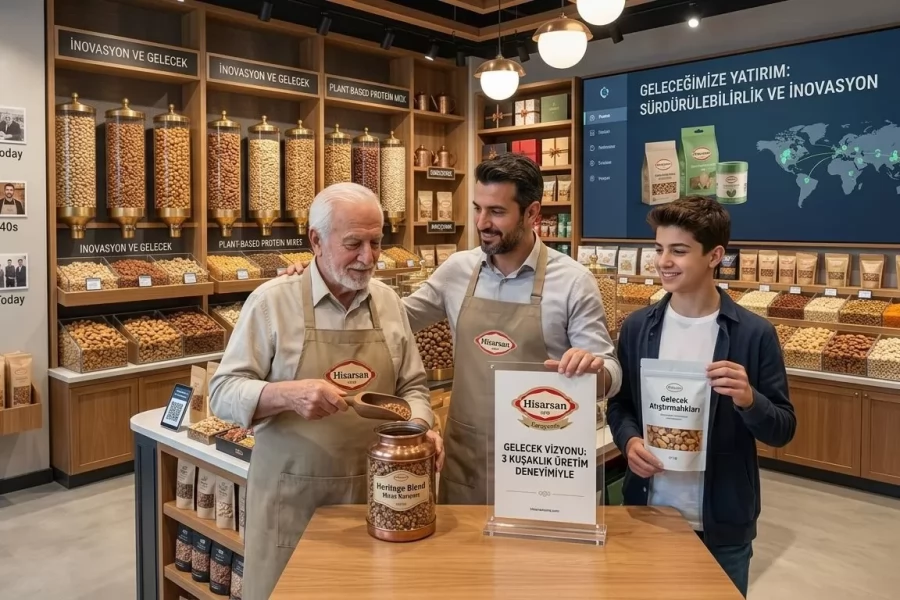
For some businesses, history means much more than a founding date. Experience gained over the years, production methods developed over time, and knowledge passed from one generation to the next are among the key elements that shape a company's identity. The story of Hisarsan Kuruyemiş illustrates the importance of this accumulated experience.
Hisarsan Kuruyemiş was founded in 1976 by Hacı Mehmet Kabayuka in Serinhisar, Denizli. The journey began in a region known for roasted chickpea production and gradually developed into a long-standing production heritage carried forward by the third generation. In 2004, the company strengthened its corporate structure under the name Hisarsan Kuruyemiş San. Tic. Ltd. Şti., bringing its traditional production background together with commercial development.
This journey involves much more than producing a single product. It reflects a long-term process of preserving production knowledge, understanding customer expectations, and adapting to changing conditions.
The Meaning of Three Generations of Experience
In family businesses, knowledge passed down through generations creates an opportunity to combine experience from the past with the needs of a new era. Understanding production processes, evaluating changes in the industry, and approaching commercial relationships with a long-term perspective are important parts of this accumulated knowledge.
Hisarsan Kuruyemiş's production history spanning three generations represents the continuity of experience in the roasted chickpea industry. Each generation can preserve the knowledge and experience of those before it while also considering changing market conditions and new customer expectations.
This approach is based not only on maintaining a connection with the past but also on preparing for the future. Bringing traditional production knowledge together with current needs is an important factor in supporting business development.
Taking Traditional Roasted Chickpea Culture into the Future
Roasted chickpeas are an important part of Türkiye's traditional snack culture. Serinhisar, a district of Denizli, is particularly associated with roasted chickpea production. The experience developed in this region over many years has helped preserve production knowledge and traditional practices.
Different varieties, including yellow, white, and coated roasted chickpeas, provide options for changing consumer preferences. This diversity makes it possible to present traditional products in different forms.
Preserving traditional flavors for future generations does not simply mean continuing methods used in the past. It also involves maintaining product characteristics, carefully managing production stages, developing packaging options, and following consumer expectations.
Hisarsan Kuruyemiş's production heritage, viewed alongside Serinhisar's roasted chickpea tradition, highlights the value of passing traditional flavors on to future generations.
Changing Consumer Expectations and Product Variety
Consumer preferences in the food industry can change over time. Product varieties, package sizes, presentation formats, and purchasing habits are among the factors that influence business planning. For this reason, following market developments is just as important as maintaining production experience.
In the nut industry, consumers may look for different flavors, a variety of packaging options, and products available in different quantities. Offering yellow and white roasted chickpeas alongside coated varieties can help businesses respond to these preferences.
When developing product variety, customer feedback, sales trends, and supply conditions should be considered together. This allows a product portfolio to be shaped not merely by adding more items but by responding to actual market needs.
An important part of a future-oriented production vision is preserving the character of traditional products while considering solutions that meet changing expectations.
Quality and the Development of Production Processes
A commitment to quality is one of the defining factors in the long-term development of a manufacturing business. Preparing products according to established characteristics, monitoring production stages consistently, and managing packaging carefully all contribute to the final product offered to consumers.
Roasted chickpea production requires attention to raw material selection, preparation stages, roasting processes, and appropriate storage conditions. Managing each stage in an organized manner helps preserve product characteristics.
Improving production processes involves evaluating traditional knowledge alongside current working methods. Reviewing production plans, monitoring product characteristics, and identifying opportunities for improvement can support long-term development.
Hisarsan Kuruyemiş's longstanding production background provides an important foundation for preserving accumulated experience while evaluating evolving needs.
Corporate Development and Business Relationships
A company's development cannot be measured by production capacity alone. Customer relationships, order management, product variety, and supply planning are also important elements of commercial success.
For wholesale businesses, reliable product supply, organized order planning, and an understanding of different customer requirements are particularly important. Clear communication between manufacturers and business partners can help commercial processes run more smoothly.
Long-term partnerships allow both parties to understand one another's expectations and develop more effective ways of working together. Trust, mutual understanding, and regular communication are among the foundations of sustainable business relationships.
Hisarsan Kuruyemiş's corporate development journey illustrates the importance of considering traditional production experience alongside commercial operations.
Sustainable Production and Preparing for the Future
Future-oriented production planning involves more than meeting current demand. It also includes using resources efficiently and evaluating processes over the long term. Raw material planning, inventory management, packaging choices, and coordination of orders are all relevant considerations.
Monitoring changes in demand can help businesses prepare more realistic production plans. Similarly, storing products under suitable conditions, managing inventory carefully, and reducing unnecessary losses can contribute to better operational performance.
A sustainable approach is not limited to preserving traditional production knowledge. It also requires adapting to changing commercial conditions, understanding customer needs, and continuously reviewing production processes.
A future vision should therefore build on the combination of experience inherited from the past and an openness to new requirements.
Hisarsan Kuruyemiş’s Vision for the Future
Hisarsan Kuruyemiş's future-oriented approach is rooted in the production journey that began in Serinhisar in 1976. Experience spanning three generations provides a valuable foundation for preserving traditional roasted chickpea culture and responding to changing market expectations.
In the years ahead, developing product variety, managing production processes carefully, monitoring customer expectations, and strengthening commercial relationships will remain important to the industry's development.
Combining experience from the past with future goals can help businesses respond more effectively to changing conditions. Production knowledge, quality awareness, regular communication, and the ability to understand customer needs are complementary parts of this process.
The story of Hisarsan Kuruyemiş demonstrates how traditional roasted chickpea production in Serinhisar can develop into a longstanding business heritage over time. The production experience passed down through three generations offers a strong foundation for preserving the values of the past while considering the needs of the future.